Introduction
The market is moving toward multi-channel selling, and staying locked into Amazon alone in 2026 is a deliberate risk, not a strategy. One of the most talked-about new sales channels right now is TikTok Shop.
In this article, I'll break down how the platform works, what makes it fundamentally different from Amazon, which selling models are available — and, critically, who can actually register and why non-US residents face a harder path than most expect.
Why TikTok Shop Is Getting So Much Attention
What TikTok Shop Actually Is
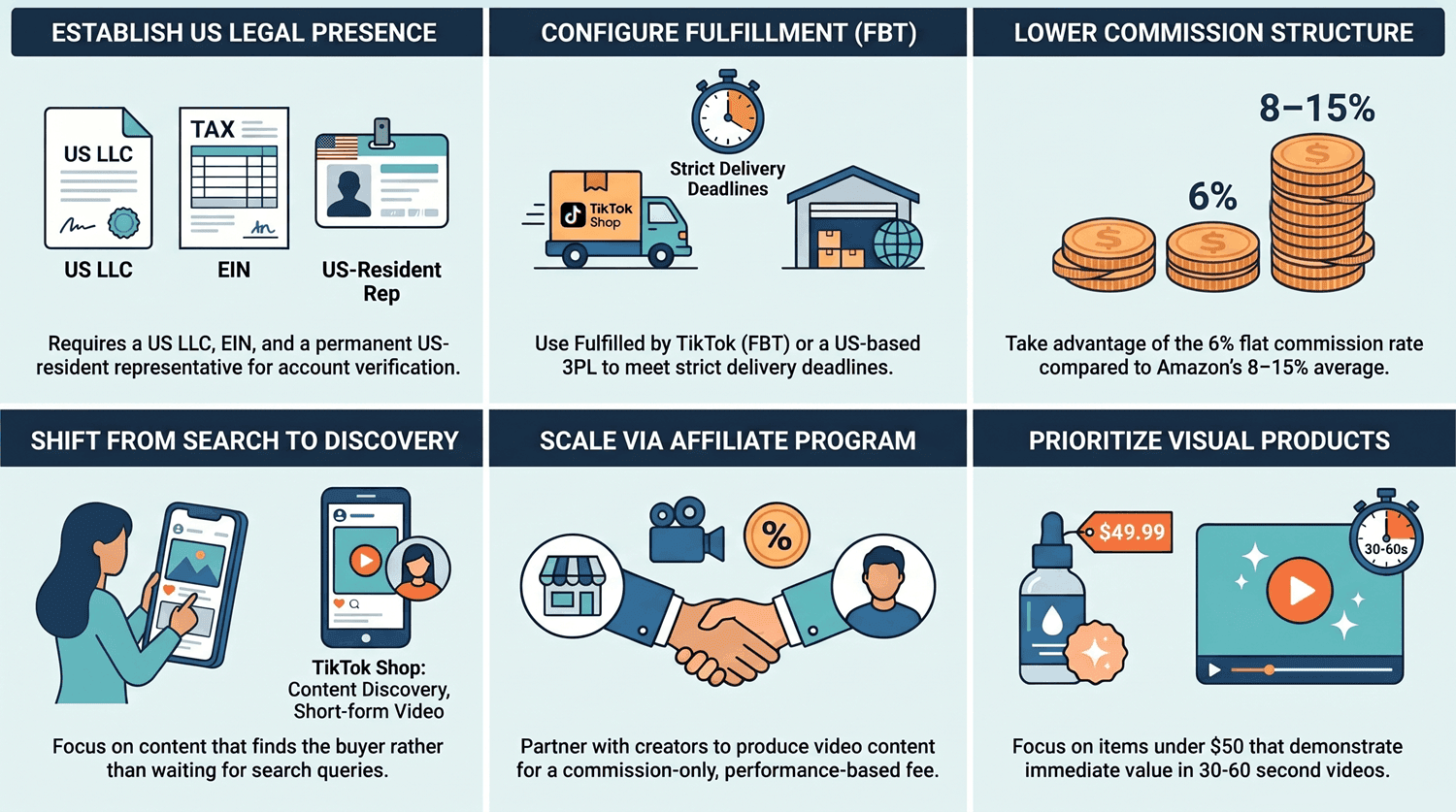
The core difference in how sales work: Amazon runs on search intent — the buyer knows what they want and goes looking for it. TikTok Shop runs on discovery — the product finds the buyer through content.
Three Selling Formats on TikTok Shop
Shoppable Videos. A seller or creator partner posts a short video with a tagged product — displayed as an orange shopping cart icon. The viewer taps it, sees the product card, and places an order. This is the primary format for organic reach.
LIVE Shopping. Live streams with real-time product demos, Q&A, and time-limited offers. In categories like beauty, gadgets, and apparel, live selling consistently outperforms both short video and the storefront tab in total sales volume.
TikTok Shop vs. Amazon: The Key Differences
Parameter | Amazon | TikTok Shop |
|---|---|---|
| Discovery model | Buyer searches for product | Product finds buyer through content |
| Platform fee | 8–15%+ | 6% (flat rate since April 2024) |
| Audience | Broad, high purchase intent | Gen Z and millennials, high engagement |
| 3P seller share | 60% of paid units (Q1 2026) | 100% — all GMV flows through sellers |
| Advertising model | Predominantly pay-to-play | Organic reach + paid ads |
| Content role | Photos and listing copy | Video is the primary sales tool |
| Fulfillment | FBA (global network) | FBT (US only) or self-fulfilled |
Selling Models Available to Sellers
Affiliate Program. This is TikTok Shop's most significant structural difference from Amazon. Independent creators get access to your catalog and promote your products for a sales commission — no upfront ad spend, payment only on results. It lets you scale and test demand using other people's content and audiences.
Fulfillment
The Main Barrier for Non-US Residents
Individual Seller. Must be 18+, hold a valid US government-issued ID — US passport, driver's license, or State ID — and actually reside in the United States. For non-residents, this path is fully closed: foreign passports are not accepted, and residency is verified, not assumed.
Business Seller. Requires a primary US business address, an EIN, and a US bank account registered to the company. This is the realistic route for most sellers already operating on Amazon.US through an LLC or Corporation.
But there's a catch here too: every store requires a Primary Business Representative — an individual who completes identity verification and serves as the permanent accountability contact for the account. This person is permanently tied to the store and can be linked to a maximum of 5 stores across the entire platform. They must hold a US government-issued ID. A non-resident cannot fill this role.
Can you register using a US-resident friend or family member? Technically yes — there's no explicit prohibition. But understand the risk: this person bears legal responsibility for the account with TikTok, their details must match the company's bank account and registration documents, and they become the official representative of your store. If the relationship breaks down or contact is lost, your control over the account becomes uncertain.
The most reliable path for a non-resident is a US legal entity — LLC or Corporation — combined with a hired representative or a specialized service that takes on the Primary Business Representative role. VPNs and proxies won't help: TikTok verifies geography at the identity level, and attempting to circumvent this risks a permanent account ban.
What Products Actually Sell on TikTok Shop
The platform is built for products that can be demonstrated in 30–60 seconds. The strongest-performing categories are those with a visible outcome: skincare (before/after), kitchen gadgets (in-action demos), apparel (try-ons and styling), health and wellness products, and distinctive items that benefit from explanation. The sub-$50 price range consistently delivers the best conversion — purchasing decisions happen on impulse. Products with low visual appeal or that require lengthy explanation tend to underperform.
TikTok Shop as an Additional Channel — Not an Amazon Replacement
Amazon and TikTok Shop operate on different psychological triggers: one fulfills existing demand, the other creates it. Many sellers already run both in parallel: TikTok content builds awareness and interest, part of that audience then searches for the product on Amazon, driving organic growth across both channels.
Book a call now…
Book a call now…
Up to 45-min duration video-call
Topics we'll discuss:
| The next steps — there are two options
|