Amazon raises FBA fees for 2027, introduces text-based shopping with Alexa, and opens Shop Direct to online retailers. Shopify reports surging AI-driven orders
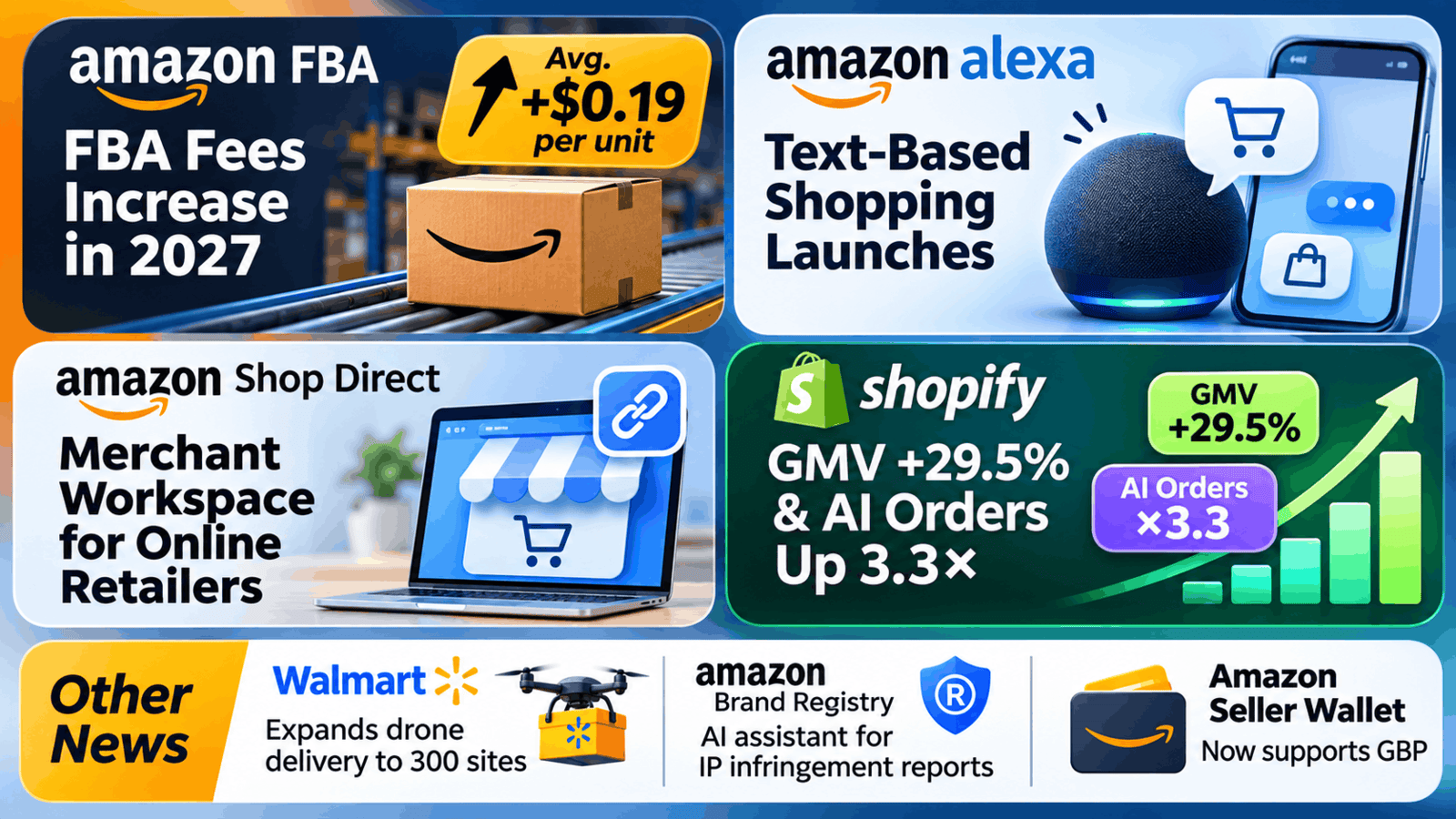
News #1. Amazon Raises FBA Fees for 2027, Averaging $0.19 More per Unit
Amazon has announced its annual Fulfillment by Amazon (FBA) fee updates. Starting January 15, 2027, fulfillment costs will increase by an average of $0.19 per unit, with the impact varying by product price, weight, and dimensions.
What happened
For small standard-size products priced between $10 and $50, fulfillment fees will rise by an average of $0.40 per unit. Products priced above $50 will see an average increase of $0.70. For example, the fulfillment fee for an item weighing up to 2 ounces and priced between $10 and $50 will increase from $3.32 to $3.75.
For large standard-size products, average increases will be $0.12 and $0.47, respectively.
Beginning February 1, Amazon will eliminate the storage utilization surcharge. Monthly storage fees and aged inventory surcharges will be consolidated into a revised storage fee structure. According to Amazon, storage costs for inventory that turns over within six months will remain unchanged or decrease, while holding older inventory will become more expensive.
Why it matters
The changes will affect product economics differently across categories. Smaller items will generally become more expensive to fulfill, while faster-moving inventory could benefit from the removal of the storage utilization surcharge. Slow-moving stock, however, will put additional pressure on margins.
What it means for e-commerce sellers
Recalculate profitability at the SKU level using the updated FBA fulfillment and storage fees. Review inventory turnover and stock age: maintaining large inventory buffers may increase costs even when it reduces the risk of stockouts.
Want Your Products to Stand Out in Amazon Search & AI?
We optimize Amazon listings - titles, bullet points, descriptions, and product attributes - to help Amazon better understand your products and match them with relevant searches and AI-driven recommendations.
News #2. Amazon Introduces Text-Based Shopping Through Alexa for Shopping
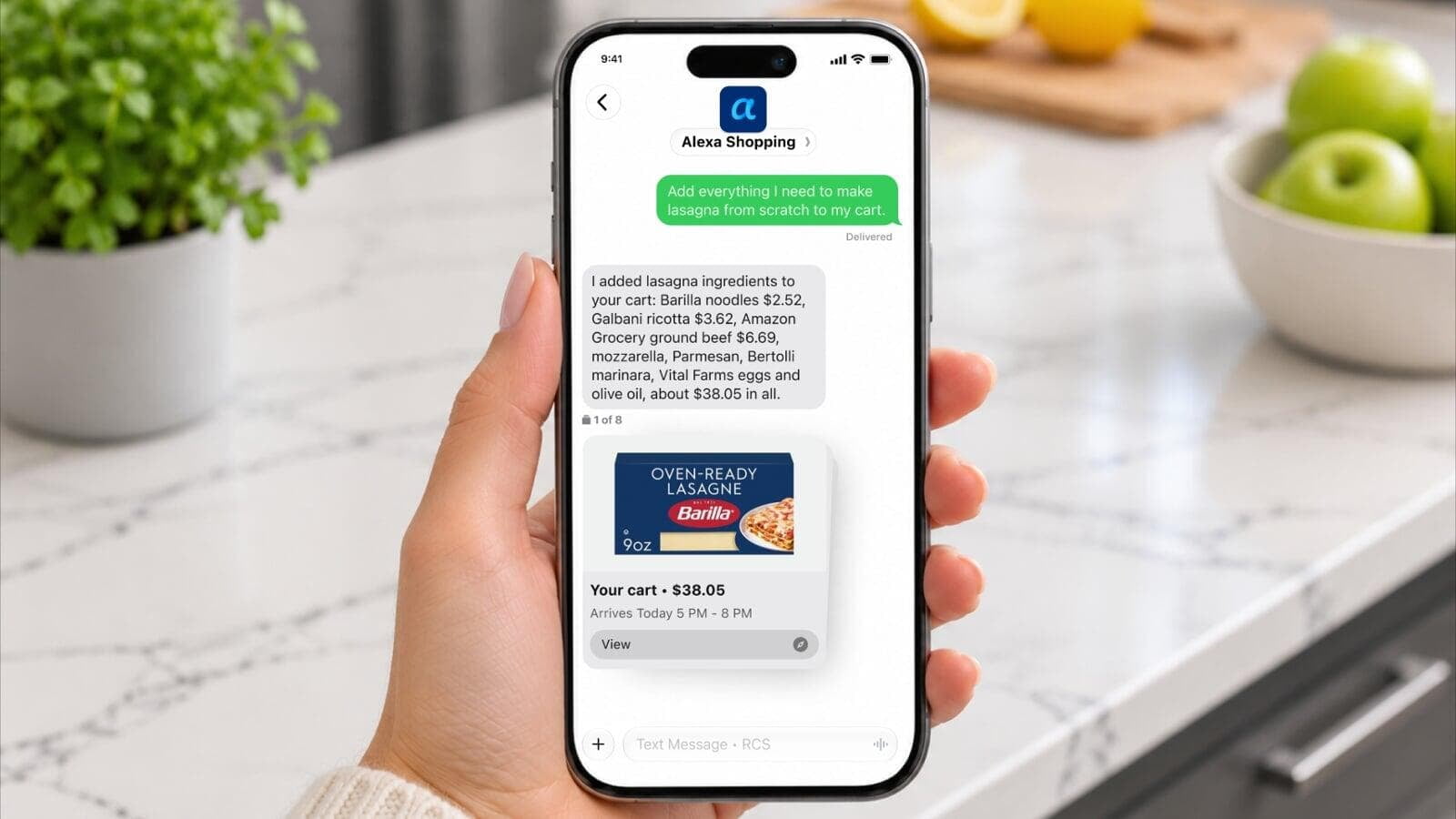
Amazon is expanding its AI shopping assistant, Alexa for Shopping, allowing customers to discover products, compare options, and place orders through text conversations. The feature will initially roll out to a limited group of users in the United States.
What happened
The new experience lets customers interact with Alexa using natural language. They can describe what they need, ask for product recommendations, reorder previously purchased items, or track price drops.
Alexa can do more than add products to a shopping cart. It can also complete purchases with customer confirmation.
Why it matters
Amazon is extending Alexa's role beyond product discovery toward completing purchases on behalf of shoppers.
Instead of browsing multiple product listings, customers can describe their requirements and receive recommendations that match their needs.
What it means for e-commerce sellers
Review whether your Amazon listings address the specific questions customers are likely to ask AI shopping assistants.
Source: Amazon
News #3. Amazon Launches Merchant Workspace to Connect Online Stores to Shop Direct
Amazon has introduced Merchant Workspace, a free self-service portal that allows independent online retailers to connect their product catalogs to Shop Direct and Alexa for Shopping.
What happened
In our previous issue, we covered the expansion of Shop Direct to 250 million product offers from external retailers.
Amazon has now introduced a dedicated onboarding tool that lets merchants register, verify their websites, submit product catalogs, and manage the availability of their offers.
The service is designed for eligible online retailers operating their own websites. Merchants can connect through product feeds, integration providers such as Feedonomics and Salsify, or an API. Amazon has not published a definitive list of supported e-commerce platforms.
Eligible products may appear in Amazon search results and Alexa shopping recommendations.
Why it matters
Shop Direct gives independent retailers an opportunity to reach Amazon shoppers without listing products on Amazon Marketplace or using FBA.
Participation is free, and merchants retain control over pricing, inventory, fulfillment, and customer service.
What it means for e-commerce sellers
Brands operating their own online stores should evaluate their eligibility for Shop Direct.
Source: Amazon
News #4. Shopify GMV Grows 29.5% as AI-Driven Orders Jump 3.3x
Shopify reported strong results for the third quarter of 2026, with gross merchandise volume (GMV) rising 29.5% to $119.15 billion and revenue increasing 32% to $3.74 billion. The company also shared new data on the performance of AI-driven shopping traffic.
What happened
Year over year, traffic from AI channels increased 2.6x, while orders originating from those channels grew 3.3x.
Visitors arriving through AI services converted at a rate 64% higher than visitors from traditional search. They were also three times more likely to land directly on product pages.
Shopify tracks traffic from AI services, including ChatGPT, but does not provide a breakdown of performance by individual platform. The company has not disclosed absolute conversion rates or the share of total GMV generated by AI-driven orders.
Why it matters
AI-powered search is already bringing shoppers with specific purchase intentions to online stores, with order growth outpacing traffic growth. However, the overall volume of purchases originating from AI channels remains relatively small.
According to Shopify, AI shopping experiences using its structured Shopify Catalog achieve twice the conversion rate of AI search experiences that do not use the catalog.
What it means for e-commerce sellers
Shopify merchants and brands with direct-to-consumer websites should measure conversion rates and revenue by AI traffic source, rather than focusing on traffic growth alone.
Review product coverage in Shopify Catalog and ensure pricing, availability, and product attributes are accurate.
Source: Shopify
Other E-commerce News
Walmart Plans 300 Additional Drone Delivery Sites
On November 5, Walmart announced a multiyear agreement with Zipline to add 300 drone delivery sites across the United States. Zipline's delivery network has already completed more than 2 million deliveries. In eligible service areas, customers can receive qualifying products in approximately 30 minutes. The expansion strengthens Walmart's rapid-delivery capabilities by leveraging its extensive store network.
Amazon Seller Wallet Adds British Pound Support
Amazon has expanded Seller Wallet to support GBP proceeds from sales on Amazon.co.uk. International sellers can hold funds, choose when to convert currencies, and transfer money through Seller Central. The service previously supported U.S. dollars and euros. International transfers are subject to fees that vary depending on the applicable terms.
Amazon Brand Registry Introduces AI-Powered Infringement Reporting Assistant
Amazon has introduced Reporter Assistant for Brand Registry users with Rights Owner or Registered Agent permissions. The AI tool helps sellers identify the appropriate intellectual property violation category, determine supporting evidence, and correct errors when submitting reports. Available through Report Infringement, the assistant does not change Amazon's existing review and enforcement process.Book a call now…
Book a call now…
Up to 45-min duration video-call
Topics we'll discuss:
| The next steps — there are two options
|