Amazon expands global logistics and AI, launches unmet demand discovery, while Shopify simplifies B2B and wholesale outside marketplaces
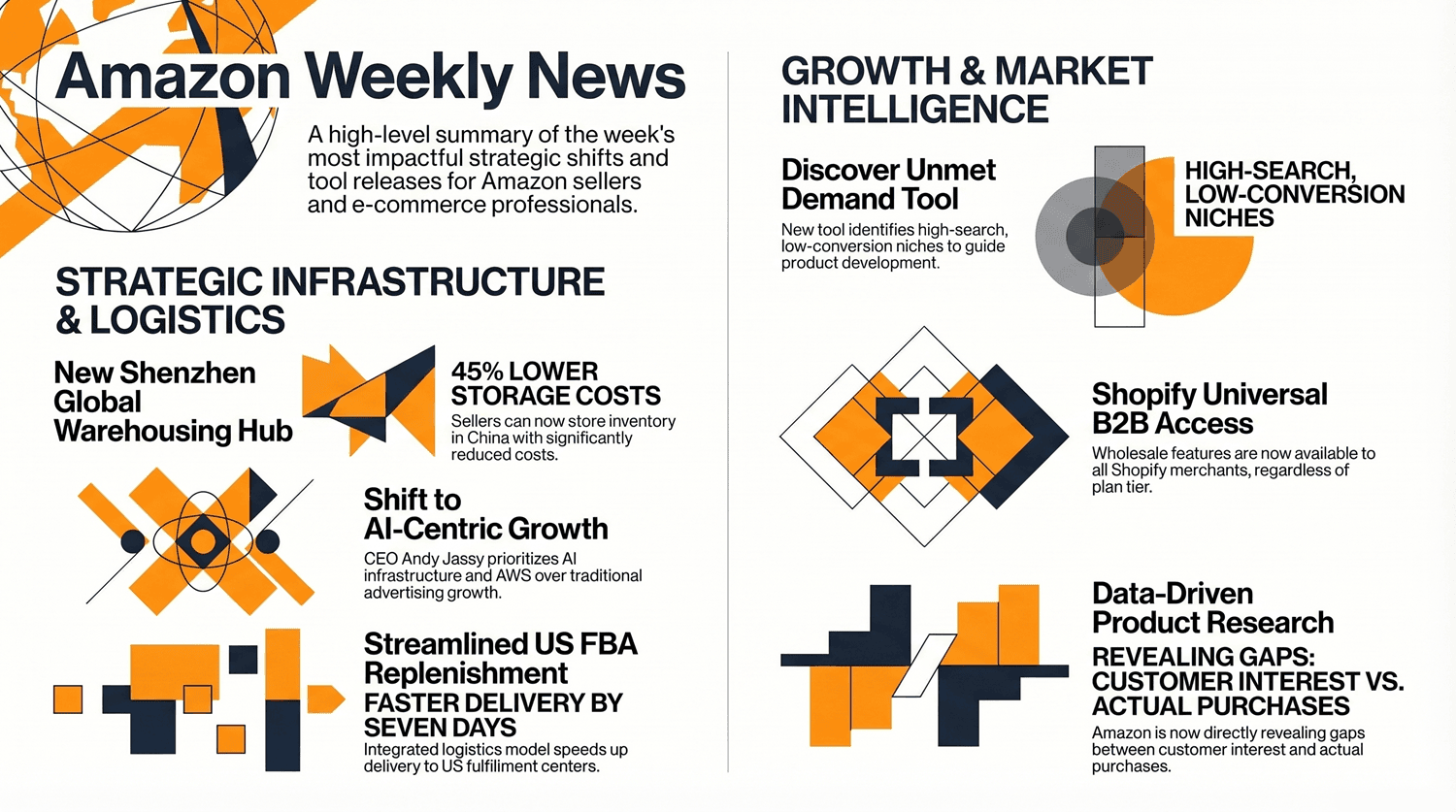
News #1. Amazon launches Global Warehousing & Distribution in China to replenish U.S. inventory
Amazon opened its first Global Warehousing & Distribution facility in Shenzhen. Sellers can store inventory in China and automatically replenish U.S. fulfillment centers through a unified logistics model.
What happened
Why it matters
Amazon is effectively moving part of the Amazon Marketplace infrastructure closer to manufacturing. This reduces storage costs and lowers capital tied up in U.S. inventory. Sellers can hold bulk inventory in China and move it based on demand. This reduces out-of-stock risk while lowering long-term storage costs. It also improves responsiveness to demand shifts in the U.S. e-commerce market. Amazon also positions this as the first step toward a global selling model where sellers send inventory once and sell globally from day one.
What it means for Amazon sellers
This creates a new layer between the factory and FBA. Sellers can ship large batches to Shenzhen while keeping working inventory in the U.S. This simplifies scaling, especially when launching new SKUs or testing demand. The model reduces working capital pressure and storage costs in the U.S. Amazon strengthens its role as the fulfillment and conversion hub, while cross-border logistics becomes embedded into Global Selling infrastructure.
News #2. Amazon CEO letter focuses on AI while advertising gets minimal attention
Andy Jassy summarized 2025 performance and outlined priorities. The main focus is AI infrastructure, AWS, and logistics; advertising receives little coverage.
What happened
In his shareholder letter, Andy Jassy highlighted key 2025 achievements: revenue growth, faster delivery speeds, expanded regional logistics, robotics deployment, and AWS scaling. Artificial intelligence was the central theme — Amazon is increasing investments in compute infrastructure, custom chips, and generative AI services in AWS. The letter also mentions warehouse automation, rural delivery expansion, and Project Kuiper satellite broadband. However, Amazon’s advertising business — roughly $69 billion in revenue — was referenced only briefly, drawing criticism from industry analysts.
Why it matters
The letter shows Amazon positioning AI and cloud infrastructure as the main long-term growth drivers. The company is increasing capital expenditures and building an AI-driven operating model affecting search, recommendations, and operational efficiency in Amazon Marketplace. Limited attention to advertising contrasts with its scale in retail media (on-platform marketplace advertising), suggesting it is viewed as a built-in monetization layer rather than a standalone strategic pillar.
What it means for Amazon sellers
AI will increasingly shape demand distribution and product visibility. Search, recommendations, and advertising will become more integrated. Advertising remains a key traffic driver inside Amazon Marketplace, even as strategic emphasis shifts toward AI infrastructure and AWS as the underlying technology platform.
News #3. Shopify opens B2B selling to all plans
Shopify made B2B functionality available across all pricing tiers. Previously, wholesale tools were limited to Shopify Plus.
What happened
Shopify expanded B2B capabilities to all plans. Sellers can now run wholesale and direct-to-consumer sales within the same store. Features include company accounts, wholesale pricing, minimum order quantities, and large order workflows. Everything is managed from one admin with a single product catalog. Previously, these capabilities required Shopify Plus.
Why it matters
Shopify lowered the barrier to launching a wholesale channel without separate infrastructure. Brands can sell retail and accept bulk orders from retailers, distributors, or corporate buyers. This expands revenue streams and helps move inventory in larger batches. In a multi-channel model, Shopify strengthens the role of owned websites as a wholesale channel alongside DTC.
What it means for Amazon sellers
Amazon sellers can use Shopify for wholesale orders, such as supplying retail chains or distributors. Amazon Marketplace remains the core retail demand and scaling channel. In practice, this creates a simple structure: Amazon for unit sales, Shopify for bulk B2B orders without building a separate system.
News #4. Amazon adds Discover Unmet Demand to Product Opportunity Explorer
What happened
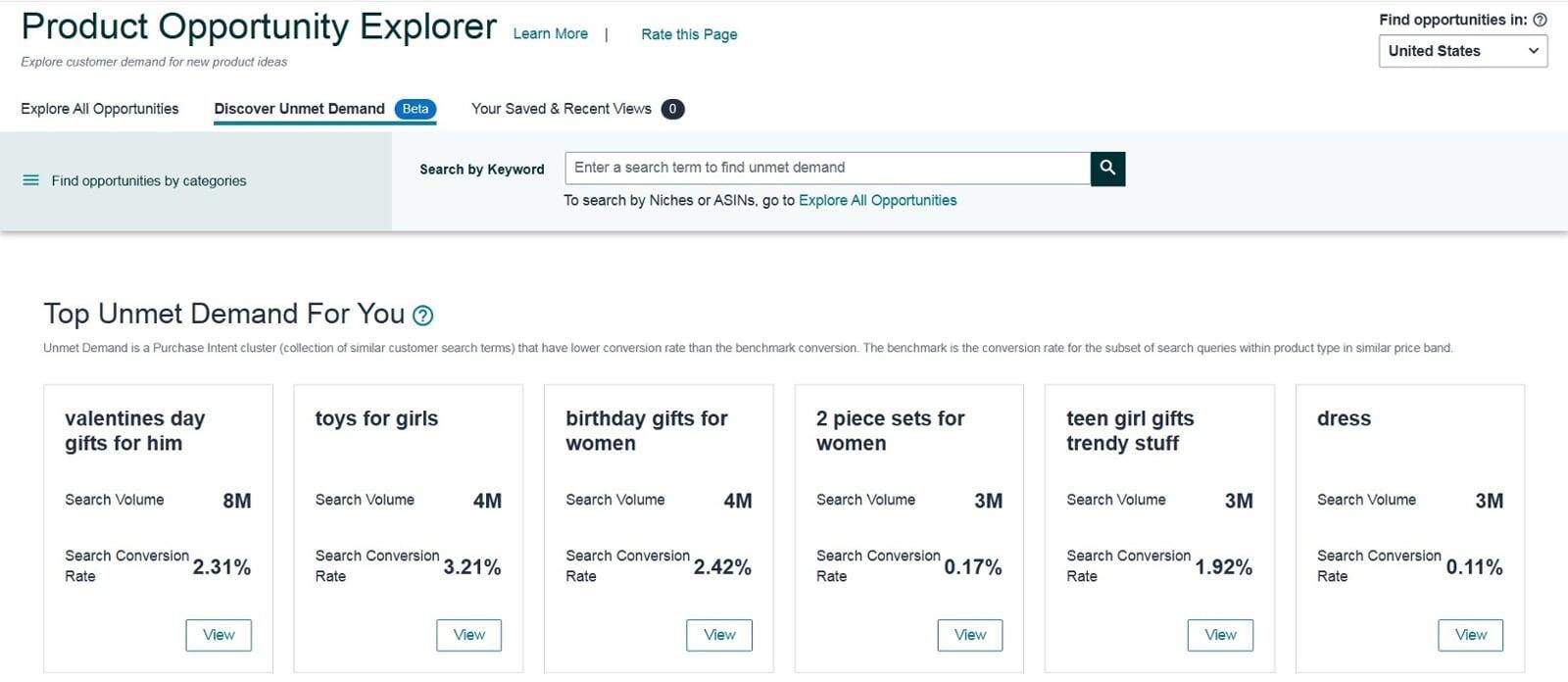
Product Opportunity Explorer now includes Discover Unmet Demand. The feature analyzes searches and purchases across Amazon Marketplace to identify categories where customers search frequently but rarely convert. It is available to professional sellers worldwide using U.S. store data. The system identifies high search volume with low conversion and suggests opportunities for new products, assortment expansion, or keyword optimization.
Why it matters
Amazon is directly exposing the gap between demand and supply. Previously, sellers relied on search volume or competitor sales. Now Amazon highlights queries with unmet demand. This shifts product research toward niches with traffic but weak conversion. Internal Amazon Marketplace data becomes a primary source for new SKU decisions.
What it means for Amazon sellers
Sellers gain a tool to identify opportunities before competition increases. They can find searches where demand exists but products do not meet expectations. This helps launch new products, improve listings, and expand product lines. Amazon strengthens its role as the central demand intelligence and scaling platform.
Book a call now…
Book a call now…
Up to 45-min duration video-call
Topics we'll discuss:
| The next steps — there are two options
|