
Amazon tests AI-powered visual search, Google introduces brand visibility analytics for AI search, while Walmart Marketplace accelerates growth and expands the role of third-party sellers
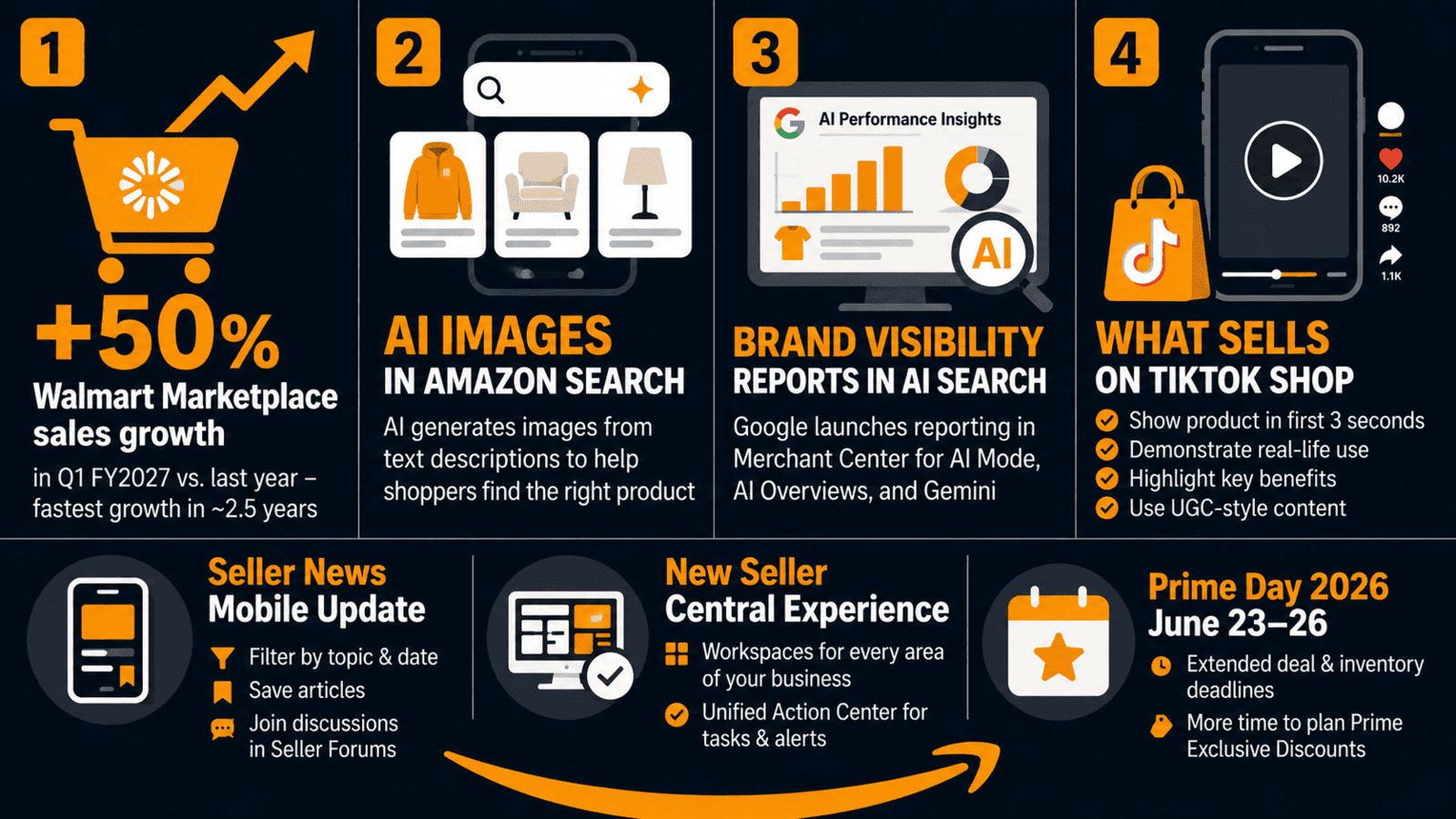
News #1. Walmart Marketplace Growth Reaches Its Fastest Pace in Years
Walmart reported its strongest Marketplace growth in several years, with third-party seller sales significantly outpacing the growth of its broader online retail business.
What happened
According to Walmart, gross merchandise sales generated by third-party sellers on Walmart Marketplace grew nearly 50% year-over-year during the first quarter of fiscal 2027. The result marks the platform’s strongest growth rate in roughly two and a half years.
Key drivers include continued assortment expansion through third-party sellers, broader adoption of Walmart Fulfillment Services (WFS), and growth of Walmart Connect, the company’s retail media advertising business. Walmart also continues investing in seller acquisition and faster delivery capabilities.Why it matters
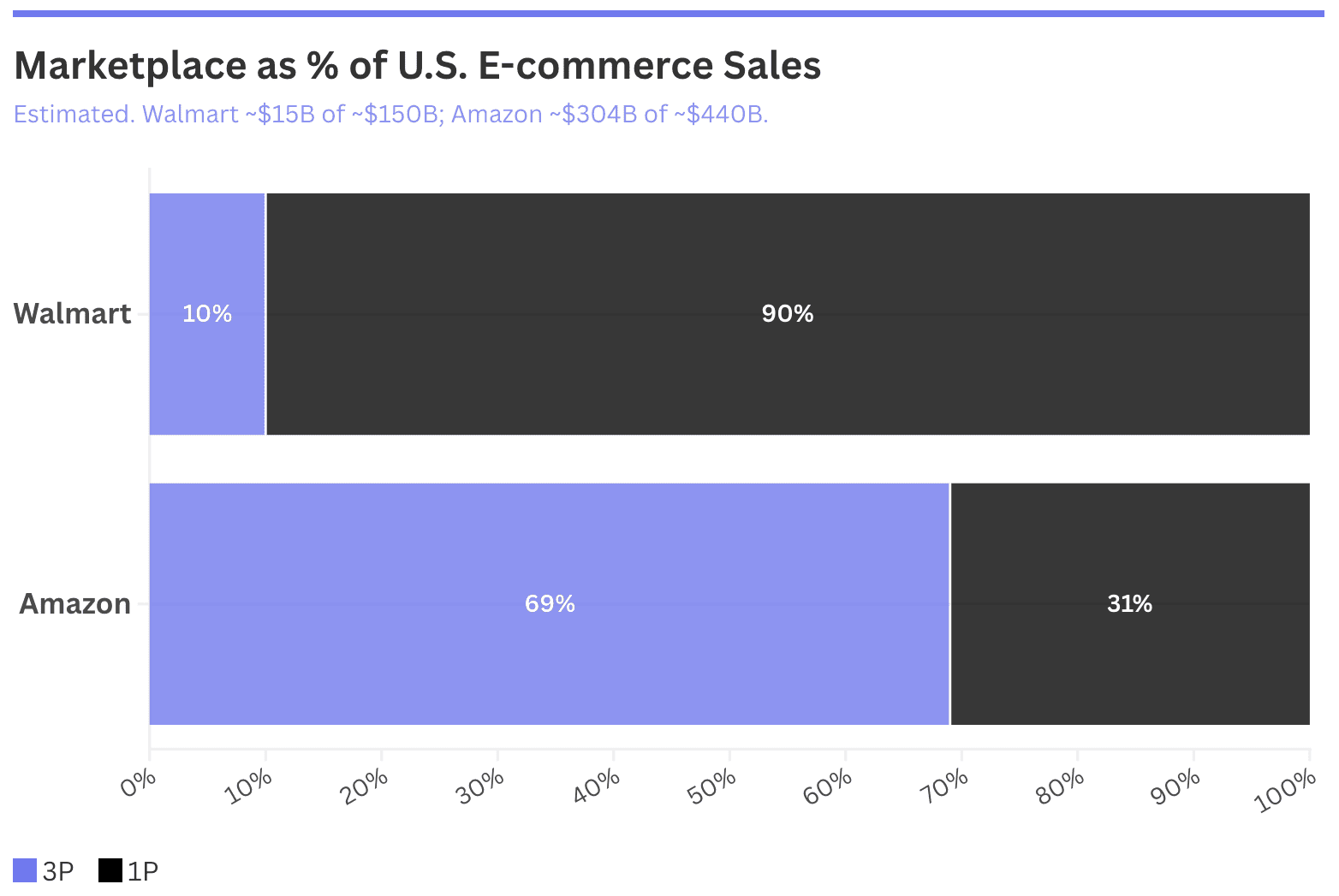
The results highlight Walmart’s increasing reliance on the Marketplace model as a core engine of e-commerce growth. Rather than depending primarily on first-party inventory, Walmart is expanding selection through external sellers, allowing the company to grow assortment while reducing inventory risk.
At the same time, advertising and fulfillment services are becoming increasingly important profit centers, following a strategy already proven by leading marketplace operators.What it means for e-commerce sellers
Walmart Marketplace is becoming a more significant sales channel within the U.S. e-commerce market. For brands already operating across multiple marketplaces, the platform offers additional opportunities to diversify revenue streams and reach new customers beyond a single ecosystem.
News #2. Amazon Adds AI-Generated Images to Search
Amazon is testing a new shopping discovery experience that uses AI-generated images to help customers refine product searches before viewing actual listings.
What happened
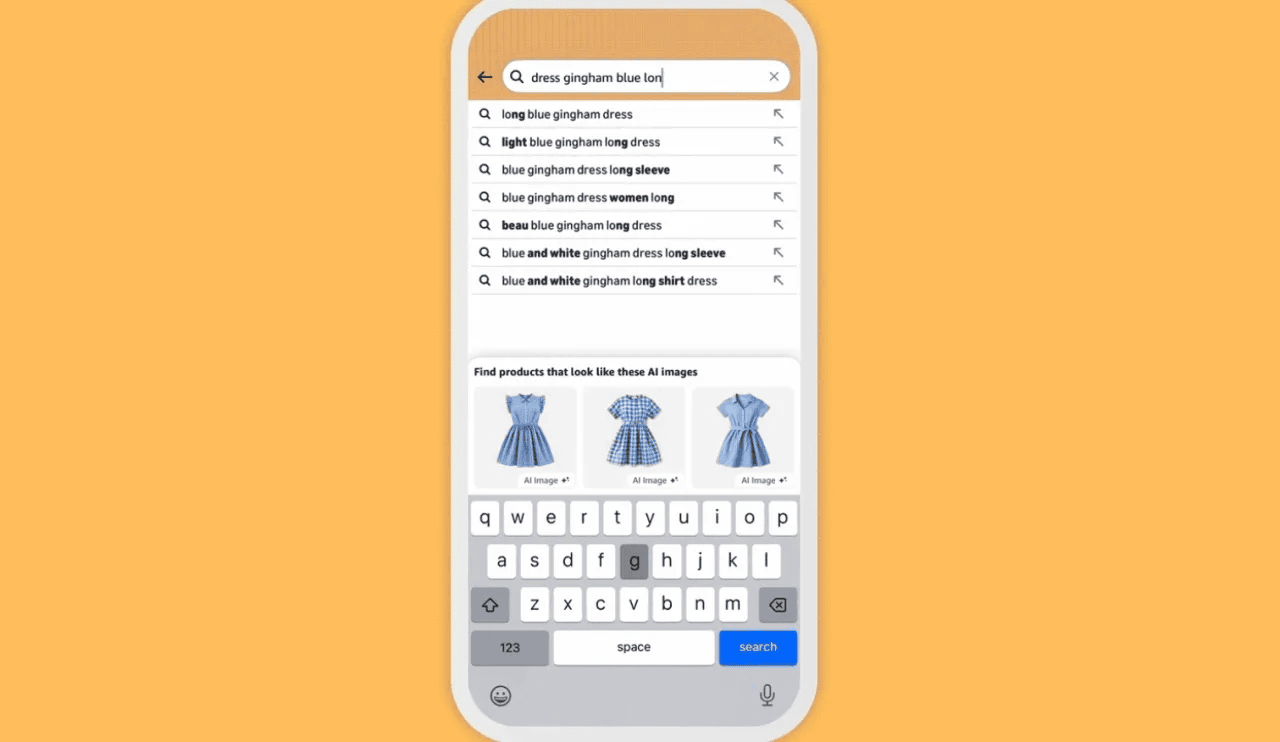
Amazon has introduced image generation directly within the search bar of its mobile shopping app. When users describe a product in natural language, the system creates several visual interpretations and allows shoppers to select the option that best matches their intent.
After choosing an image, customers are shown relevant products from Amazon’s catalog. The feature is currently being tested in categories including apparel, furniture, and home goods.
According to Amazon, the goal is to help shoppers who can describe how a product should look but may not know the exact terminology needed for a traditional search query.Why it matters
Product discovery is becoming increasingly visual. Rather than relying solely on keywords, Amazon is using generative AI to interpret customer intent through imagery.
The approach has the potential to reduce search friction, shorten the path to purchase, and improve product discovery within large catalogs. More broadly, it reflects a growing trend across U.S. e-commerce, where generative AI is being integrated into navigation and shopping experiences.What it means for Amazon sellers
Visual merchandising becomes even more important in an AI-assisted shopping environment. Product images, variations, and listing attributes that closely match customer expectations are more likely to surface in relevant search experiences, increasing the value of high-quality catalog content.
News #3. Google Launches Brand Visibility Reporting for AI Search
Google has introduced AI Performance Insights in Merchant Center, giving brands a way to measure how their products appear across AI Mode, AI Overviews, and Gemini.
What happened
Google is rolling out AI Performance Insights, a new reporting feature within Merchant Center that helps merchants understand how their products and brands perform across Google’s AI-powered shopping experiences.
The tool tracks brand visibility, analyzes shopper queries, identifies products frequently surfaced in AI recommendations, and measures downstream customer actions. It is one of the first dedicated reporting systems focused specifically on AI-driven product discovery.
The launch supports Google’s broader effort to integrate commerce into AI Mode and Gemini, where users increasingly receive product recommendations through conversational interfaces rather than traditional search results.Why it matters
This is more than a new analytics dashboard. It represents the emergence of a new measurement layer for AI commerce.
Merchants have traditionally focused on rankings, impressions, and clicks. Now they can begin measuring visibility directly inside AI-generated recommendations.
Few AI platforms currently offer this level of transparency. OpenAI is expanding product recommendations within ChatGPT, Microsoft continues developing commercial experiences in Copilot, and Amazon is investing in Alexa for Shopping and AI-powered discovery tools. However, none currently provide reporting as detailed as Google’s new Merchant Center feature.What it means for e-commerce sellers
As AI-powered shopping grows, product data quality, visual assets, and catalog attributes will become increasingly important. Google is among the first platforms offering visibility into this emerging traffic source, but similar reporting capabilities could eventually become standard across both commerce and AI ecosystems.
News #4. TikTok Shop Reveals What Drives Sales in Shoppable Video
What happened
TikTok Shop published a practical framework for creators and sellers producing shoppable content.
According to the guidance, top-performing videos typically showcase the product within the first three seconds, demonstrate real-world usage, and immediately communicate the problem the product solves.
The platform also recommends close-up product shots, spoken explanations of key benefits, on-screen text overlays, and before-and-after demonstrations when relevant. Authentic user-generated content (UGC) style videos are generally favored over highly polished traditional advertisements.Why it matters
TikTok Shop is increasingly formalizing what successful commerce content looks like.
Instead of optimizing primarily for views and engagement, sellers are being encouraged to focus on metrics directly tied to purchasing behavior, including product page visits, add-to-cart actions, and completed orders.
The guidance suggests that TikTok’s recommendation systems are becoming more closely aligned with commercial outcomes rather than pure content popularity.What it means for e-commerce sellers
The recommendations provide a practical framework that extends beyond TikTok Shop. Across video commerce channels, products need to appear immediately, value propositions must be clear from the start, and product demonstrations are becoming more important than entertainment-focused storytelling alone.
Other Amazon News
Amazon upgrades Seller News in the mobile app
The redesigned experience brings featured updates, topic-based filtering, bookmarks, and direct access to Seller Forums discussions, making it easier for sellers to stay informed while managing their business on mobile devices.
Amazon launches a new Seller Central experience
Seller Central has been reorganized into dedicated workspaces for business management, products, supply chain, orders, finance, customers, and marketing. A unified Action Center now highlights the most important tasks and alerts across all sections.
Amazon confirmed that Prime Day will run from June 23–26 and extended several deadlines for deals, inventory planning, and Prime Exclusive Discounts, giving sellers additional time to prepare for one of the largest shopping events of the year.
Book a call now…
Book a call now…
Up to 45-min duration video-call
Topics we'll discuss:
| The next steps — there are two options
|