
Amazon raises FBA costs, changes ad billing, tightens discount rules, while Perplexity continues its fight over data access
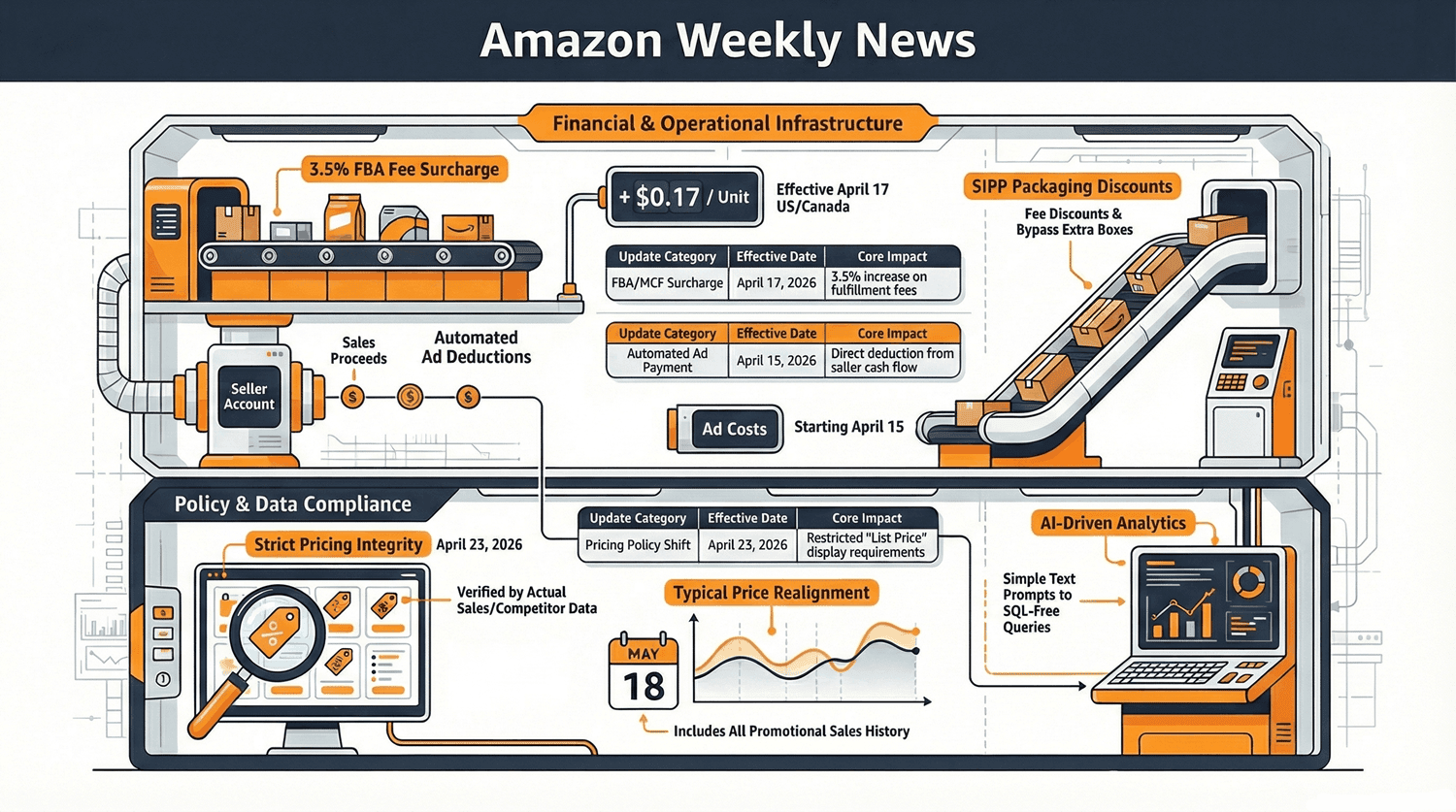
News #1. Amazon adds a 3.5% surcharge to FBA fees in the US and Canada
Amazon is introducing a fuel and logistics surcharge for FBA, MCF, and Buy with Prime. The update triggered strong reactions across the seller community, as it represents another shift in unit economics following the January fee changes.
What happened
Why it matters
For the U.S. e-commerce market, this means higher logistics costs within the FBA infrastructure that many sellers rely on for conversion. While 3.5% appears modest, it comes on top of the January 2026 fee update. Low-margin products, oversized items, and price-sensitive categories are most affected. Sellers also reacted to the fact that the surcharge is described as temporary but without a clear end date.
What it means for Amazon sellers
Sellers need to reassess minimum pricing, advertising contribution, and target margins across FBA listings. Products already operating close to break-even require immediate review. Amazon remains the core scaling channel, but assortment planning becomes more important: FBA for core SKUs, while MCF and external channels should be used only where economics remain sustainable.
News #2. Amazon will automatically deduct advertising costs from seller proceeds
Amazon is changing the payment model for Amazon Ads: advertising spend will now be deducted directly from seller payouts. The update begins April 15 and has already sparked strong reactions among 3P sellers.
What happened
Why it matters
This shifts control of cash flow within Amazon’s retail media ecosystem. Traffic, conversion, and ad spend now sit inside the same financial loop. That reduces payment risk for Amazon and accelerates ad revenue collection. For sellers, it removes flexibility to fund ads through credit cards, payment delays, or external financing.
What it means for Amazon sellers
News #3. Amazon tightens reference pricing and Typical Price calculations
Amazon is updating how discounts are displayed in Amazon Marketplace. List Price and Typical Price will now be more strictly tied to real sales data and price history. Changes roll out in late April and May 2026.
What happened
Why it matters
Amazon is tightening control over how discounts are presented. This reduces “artificial” discounts where List Price is used as an anchor without real sales at that level. Products with consistent pricing history gain more stable conversion, while aggressive discounting without price credibility becomes less effective.
What it means for Amazon sellers
Discount strategies need to reflect real pricing history. If products are frequently sold below the base price, the displayed discount may shrink or disappear. Sellers may need fewer but more structured promotions that support a stable base price.
News #4. Perplexity files appeal in data access dispute with Amazon
What happened
In the conflict between Amazon and Perplexity AI, Perplexity is formally challenging allegations of “hacking” and has filed an appeal. The company argues it accesses Amazon content the same way a regular browser user would. Amazon maintains that the behavior constitutes automated data collection that violates platform rules.
Why it matters
What it means for Amazon sellers
There is no immediate sales impact, but the outcome may influence future traffic sources. Depending on the decision, AI-driven discovery channels may expand, or traffic will remain more centralized within Amazon. Amazon remains the primary conversion point either way.
Other Amazon News
AI analytics in Amazon Marketing Cloud
Amazon added AI-powered querying to Amazon Marketing Cloud, allowing advertisers to generate reports using plain-language prompts instead of SQL. This simplifies Amazon Ads analysis and speeds up campaign decision-making.
New international expansion insights
Amazon enhanced Marketplace Product Guidance with clearer recommendations on which ASINs to expand globally, based on demand, growth trends, and competition. Updated forecasting models help prioritize products with stronger international potential.
Starting April, Amazon updates packaging for MCF and Buy with Prime. Packing slips are removed by default, and SIPP-certified items ship without an Amazon overbox and may receive discounts. The changes reduce packaging waste and lower fulfillment costs.
Book a call now…
Book a call now…
Up to 45-min duration video-call
Topics we'll discuss:
| The next steps — there are two options
|